Here is a test that costs nothing and takes ninety seconds.
Tonight, after dark, go into the room where you spend the most time. Turn the ceiling light off. Turn on every lamp in the room. Sit back down.
Almost everyone is surprised by how much better it looks.
Nothing was bought. Nothing moved. The only thing that changed is where the light comes from — and that is the whole subject of this article.
Why one ceiling fixture never finishes a room
Overhead light comes from a single point, straight down.
It flattens faces, because the light hits the top of everything and nothing from the side. It drops hard shadow under every horizontal surface — the coffee table, the shelf, the underside of a chin. And it tells your eye that the room is one flat plane, because there is only one place the light is coming from and nothing else to look at.
Lamps do the opposite. They put light at 30 inches, 40 inches, 60 inches — the heights people actually occupy — and they give your eye three or four separate pools of brightness to move between. That variation is what your brain reads as depth.
Three light sources minimum in any room you sit in. Five if the room is over 200 square feet.
The five layers
1. Ambient
The general wash that lets you cross a room safely. Ceiling fixture, recessed cans, a large flush mount, a wall of windows during the day.
Ambient light is necessary and almost never sufficient. Its correct role in the evening is background — on a dimmer, at 30 to 50 percent, doing the minimum.
2. Task
Light aimed at something you are doing. A reading lamp beside a chair. Under-cabinet lighting over a countertop. A desk lamp. A sconce beside a bed at the right height for a book.
Task lighting is the layer people most often skip and most often miss without knowing what is missing. If you find yourself squinting at a recipe or moving to a different chair to read, that is a task lighting gap.
3. Accent
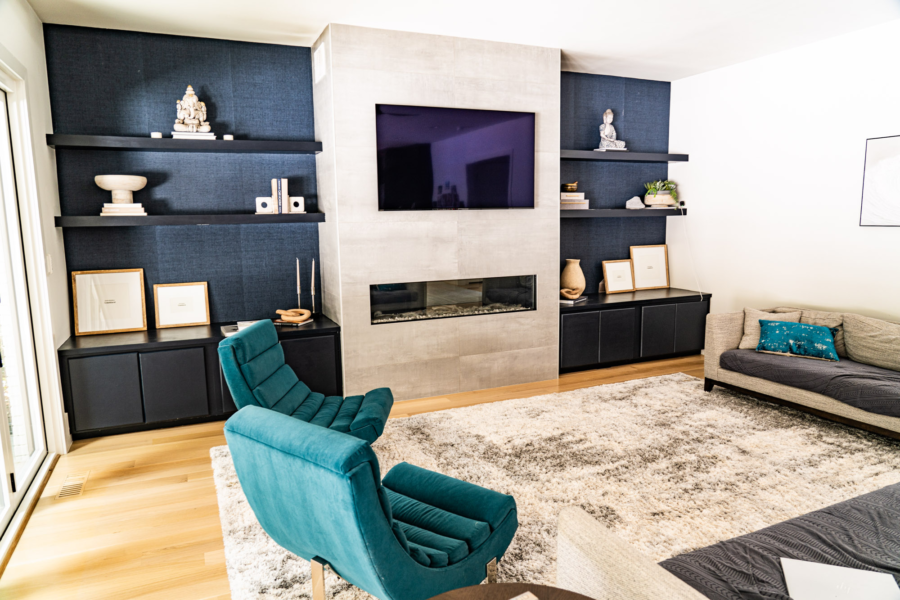
Light aimed at an object rather than at a task. A picture light over art. An uplight tucked behind a large plant, throwing leaf shadow onto the wall. An interior-lit cabinet.
Accent light is what makes a room look considered after dark, because it demonstrates that someone decided what was worth looking at.
4. Decorative
The fixture that exists to be seen. A pair of sconces flanking a mirror. A pendant with a shape worth having. A lamp whose base is really a sculpture.
Decorative fixtures often produce very little usable light, which is fine. That is not their job. Do not, however, count a decorative fixture toward your three-source minimum.
5. Natural
The window, and what you do to it. This is a lighting layer, and treating it as a window-treatment decision instead of a lighting decision is why so many rooms are dim at 2pm.
A sheer panel diffuses harsh afternoon light without losing it. A blackout lining in a bedroom is a sleep decision. A rod mounted near the ceiling and extended past the casing lets panels stack off the glass, so you keep the daylight you are paying a mortgage for.
Full detail on that in the curtain section of the Designer Favorites collection.
Three of the five, minimum. Four is better. Five is a finished room.
The number on the box: color temperature
This is the single most consequential and least understood specification in residential lighting, and it is printed on every bulb package.
Color temperature is measured in Kelvin. Lower numbers are warmer and more orange. Higher numbers are cooler and more blue.
| Kelvin | Character | Where it belongs |
|---|---|---|
| 2200–2400K | Amber, candlelight | Decorative filament bulbs, accent only |
| 2700K | Warm white | Living rooms, bedrooms, dining rooms, family rooms |
| 3000K | Soft white, slightly crisper | Kitchens, bathrooms, laundry, closets |
| 3500K | Neutral | Workshops, some task lighting |
| 4000K+ | Cool to daylight | Garages, utility spaces |
Nothing above 3000K in a living space. If your house feels vaguely institutional after dark and you have never checked a bulb box, this is almost always the reason.
Two more things worth knowing when you buy bulbs:
Consistency matters more than the exact number. Two lamps at 2700K and one at 4000K in the same room looks worse than three lamps all at 3000K. Mixed temperatures read as a mistake even to people who cannot name what they are seeing.
CRI, if the manufacturer publishes it. Colour Rendering Index describes how accurately a bulb shows colour. 90 and above is worth paying a little more for in a room where you look at art, fabric or food. Many inexpensive LEDs sit around 80 and quietly wash the colour out of a room.
Mounting heights, with the actual numbers
These are the measurements I use on every project. They are clearances, not preferences.
Pendants over a kitchen island
30 to 36 inches from the countertop to the bottom of the fixture. Lower for a large-diameter pendant, higher for a small one.
Space multiple pendants 24 to 30 inches apart, centred on the island rather than on the room — an island is rarely centred in its own space. Two large pendants read better than three small ones on an island under 8 feet.
Dining chandelier
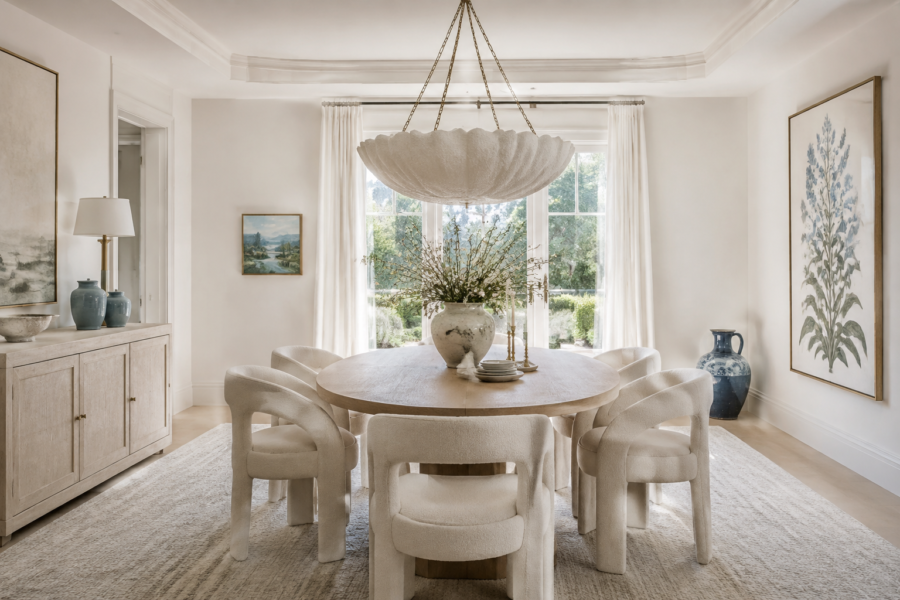
30 to 34 inches above the tabletop with an 8-foot ceiling. Add roughly 3 inches for every additional foot of ceiling height. In a 10-foot room, that is 36 to 40 inches.
The fixture’s diameter should be roughly half to two-thirds the width of the table, and it should never be wider than the table itself.
Wall sconces
60 to 66 inches from the floor to the centre of the fixture in a hallway or beside a mirror. Beside a bed, drop to 48 to 52 inches so the light lands on a page rather than in your partner’s eyes.
Table lamps
The bottom of the shade sits at roughly eye level when you are seated. For most people in most chairs, that means 26 to 30 inches from the floor to the lower edge of the shade.
The test is simple: sit down in the chair. If you can see the bulb, the lamp is too short or the chair is too low.
Floor lamps
Overall height 58 to 64 inches for a reading lamp beside a chair, with the shade bottom again near seated eye level.
Shop the lighting edit
Product block — 6 slots, PRODUCT-GRID module.
- {{PRODUCT_1}} — Table lamp, shade bottom near 27 in.
- {{PRODUCT_2}} — Floor lamp for a reading chair.
- {{PRODUCT_3}} — Island pendant, scaled for a 7–9 ft island.
- {{PRODUCT_4}} — Dining fixture.
- {{PRODUCT_5}} — Plug-in sconce, renter-friendly.
- {{PRODUCT_6}} — Dimmable 2700K bulb multipack, CRI 90+.
Put it on a dimmer
Every overhead fixture in your house currently runs at exactly one brightness: the one chosen when it was installed, for the purpose of construction, not for a Tuesday evening in November.
A dimmer is the least expensive change with the largest visible return of anything in this article.
Three routes, in order of effort:
Wall dimmers where the wiring supports them. This is an electrician’s afternoon, or a competent afternoon of your own if you are comfortable at the panel.
Plug-in dimmers for lamps. They sit inline on the cord and cost very little.
Smart bulbs where neither of the above is practical, particularly in a rental. Confirm the bulb is dimmable and confirm the Kelvin — many smart bulbs default to something far cooler than 2700K out of the box.
A room-by-room starting point
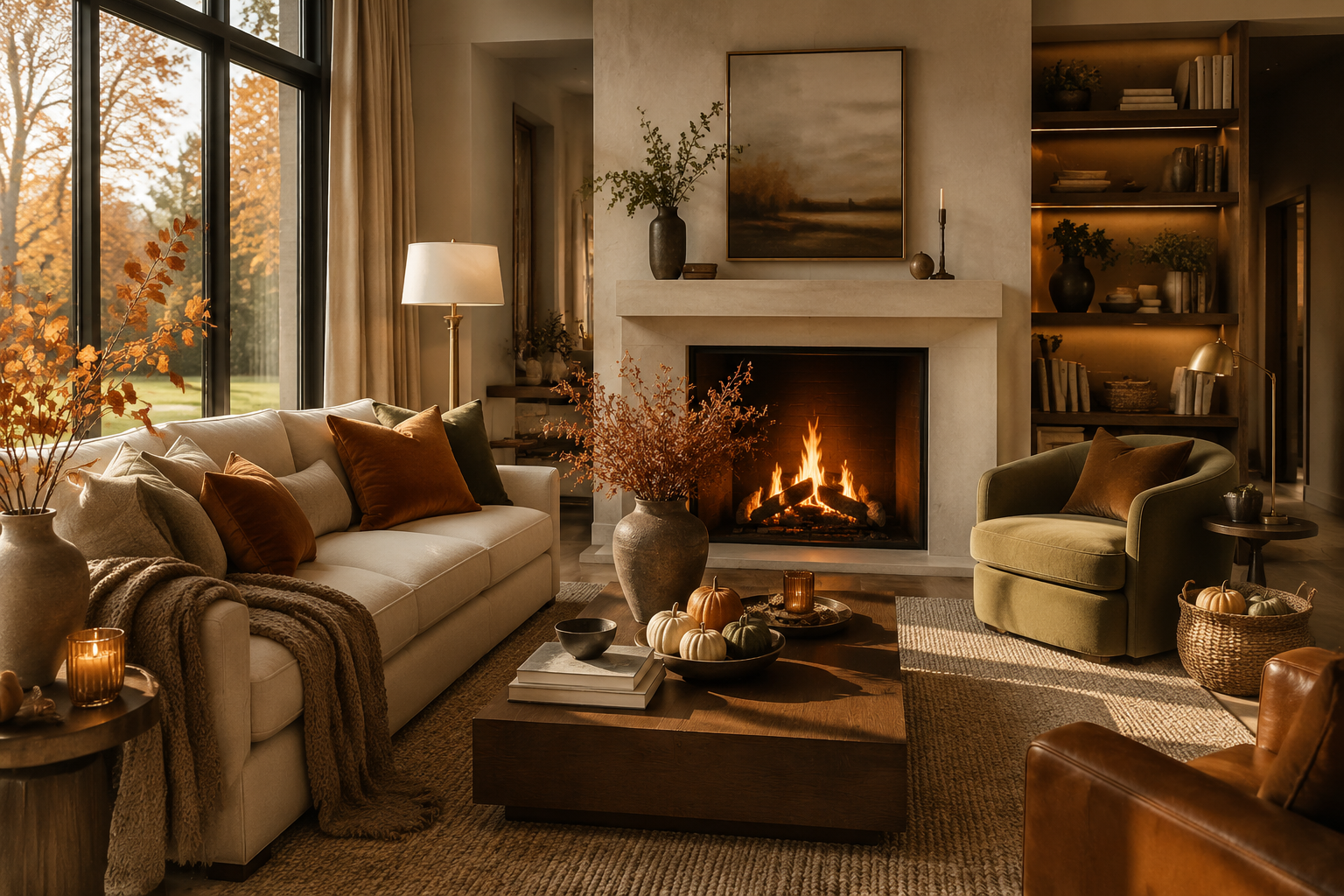
Living room: ceiling fixture on a dimmer (ambient), two table lamps (task and decorative), one picture light or plant uplight (accent), curtains hung high and wide (natural). Five layers, and only one of them requires an electrician.
Bedroom: overhead on a dimmer, two bedside sconces or lamps at 48 to 52 inches, one low accent light, blackout-lined panels.
Kitchen: recessed at 3000K, under-cabinet task lighting, island pendants at 30 to 36 inches. Under-cabinet is the layer that changes a kitchen most and gets installed least.
Dining room: chandelier at 30 to 34 inches on a dimmer, a pair of sconces or a lit sideboard lamp, candles. A dining room lit at 100 percent is a conference room.
Where to go next
The Lighting Plan Workbook walks one room at a time: what you have now, which layer is missing, what fixture goes where and at what height. It includes a bulb chart sized to keep in a kitchen drawer and fill-in pages for the whole house.
If you would rather have the plan built for your actual floor plan, that is the 60-minute design consultation.