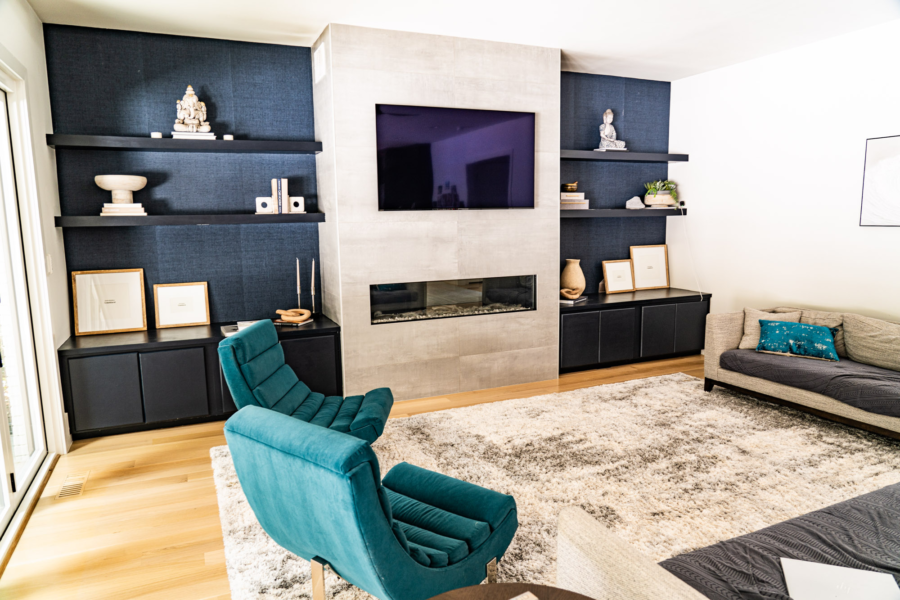

A sofa is one of three things in a house worth overpaying for. The other two are the mattress and the dining chairs — everything you touch every day and cannot casually replace.
But “worth overpaying for” is not the same as “buy the expensive one.” A moderately priced sofa with honest specifications is a better purchase than an expensive one with vague ones. Price is a poor proxy for construction, and the furniture industry knows it.
What follows is how to tell the difference. Four checks. Four minutes. All of them possible in a showroom, and most of them possible from a product page if the retailer publishes real specifications.
Check 1: The frame
What you want: kiln-dried hardwood.
Kiln drying pulls moisture out of lumber under controlled heat so the wood will not warp, split, or shift as humidity changes. In a Carolina summer that is not an abstract concern — a frame made from air-dried softwood will move, and a frame that moves produces the squeak and the wobble that make a four-year-old sofa feel like a ten-year-old one.
How to check it:
Read the spec sheet, and read it sceptically. “Engineered wood” means plywood or particleboard. “Solid wood,” with no species named and no drying process mentioned, is a vocabulary choice rather than a construction claim. Ask which species. Ask whether it was kiln-dried. A good salesperson will know or will find out, and a retailer that cannot answer is telling you something.
Then knock the frame under the front rail, near the leg. Solid hardwood sounds dense and dull. A hollow, resonant knock means a box.
Look at the legs, too. Legs that are integral to the frame — carved from it or bolted through it — are stronger than legs screwed into a plate. Screwed-in legs are not disqualifying, but they are the first thing to loosen.
Check 2: The suspension
Lift a seat cushion off and look down into the deck. This is the single most informative ten seconds of a sofa purchase and almost nobody does it.
Eight-way hand-tied. Individual coil springs, tied by hand in eight directions with twine. It is the traditional standard, it distributes weight beautifully, and it is expensive because it is genuinely labour-intensive.
Sinuous steel springs. S-shaped steel wires running front to back across the deck. A fair second, considerably less expensive, and entirely adequate in most residential use. This is what the majority of well-made mid-priced sofas use.
Webbing alone. Fabric or elastic straps stretched across the frame with no springs. It will sag, and it will sag first in the seat you use most. Avoid it in anything you intend to keep.
Note that “hand-tied” gets used loosely in marketing copy. Confirm eight-way.
Check 3: The seat depth
This is the number that determines whether you still like the sofa in year three, and it is the one virtually nobody checks.
21 to 22 inches. You sit upright, back against the cushion, feet flat on the floor. This is a sofa for conversation, for dinner-party overflow, for sitting with people. It is the right answer in a formal living room and for anyone under about 5’6″.
23 to 24 inches. You lounge. Legs up, back at an angle, a blanket involved. Wonderful for a film. Awkward at a dinner party, because sitting upright on a 24-inch seat means either perching on the front edge or having your feet leave the floor.
Over 25 inches. A daybed with a back on it. Know that is what you are buying.
How to check it: measure from the face of the back cushion to the front edge of the seat cushion. And measure the sofa you own right now, before you shop for the next one. You already know whether you like it — you just have not put a number on it.
Then sit in it for four full minutes. Not thirty seconds. Lean back. Put your feet up. Stand up and sit down again. A sofa that is comfortable for thirty seconds and wrong for four minutes is wrong.
Check 4: The fabric
Find the double-rub count. It is an abrasion rating produced by a standardised test, and it is printed on the tag or listed in the specifications.
| Double rubs | Rating | Where it belongs |
|---|---|---|
| Under 9,000 | Decorative | Pillows, an accent chair nobody sits in |
| 9,000–15,000 | Light residential | A formal room used occasionally |
| 15,000–30,000 | General residential | Most living rooms |
| 30,000+ | Heavy residential | Family rooms, children, dogs |
Then separate two claims that get sold as one.
“Performance fabric” is a stain-resistance claim. It usually means either a topical finish or a solution-dyed fibre where colour goes all the way through. It describes how the fabric handles a spilled glass of red wine.
Durability is a wear claim, and that is the rub count. A fabric can be excellent at shedding a spill and mediocre at surviving five years of a dog getting on and off it. Ask about both, separately.
Two more fabric notes. Ask whether the cushion covers are removable and whether the fabric can be professionally cleaned — a sofa you cannot clean is a sofa with an expiry date. And request a swatch before ordering. Fabric colour on a screen is unreliable in a way that is difficult to overstate.
Shop Investment Pieces
Product block — COLLECTION module, 6 slots. Every slot’s selection note must state frame, suspension, seat depth and fabric rating, because that is the entire argument of this page.
- {{PRODUCT_1}} — Sofa. Frame / suspension / seat depth / rub count.
- {{PRODUCT_2}} — Sofa at a lower price band, same four checks.
- {{PRODUCT_3}} — Sectional with published diagonal depth.
- {{PRODUCT_4}} — Accessible-price sofa that still passes the checks.
- {{PRODUCT_5}} — Dining chair with published construction.
- {{PRODUCT_6}} — Performance-fabric option with rub count listed.
The cushion question
Not a durability issue. A maintenance issue, and worth deciding deliberately.
All foam. Holds its shape, requires nothing from you, and can feel firm. High-resiliency foam at a density of roughly 1.8 lb or above holds up considerably better than the standard grade .
Foam core with a down-blend wrap. A foam core for structure with a down-and-feather wrap for softness. My usual recommendation. It looks relaxed without collapsing.
All down. Sublime for about two days at a time. Requires fluffing after every use and will look lived-in by Tuesday. Beautiful, and a commitment.
Ask for the ratio. A “down-blend” at 10 percent down behaves essentially like foam. At 50 percent it needs weekly attention. Neither is wrong. Knowing which one you are buying is the point.
Sizing it to the room
Before you fall for a piece, three measurements.
Length against the wall. Leave at least 6 inches of breathing room on each side of the sofa if it sits between two obstructions, or the wall reads jammed.
Depth into the room. Overall depth, not seat depth. A 40-inch-deep sofa plus an 18-inch gap plus a 20-inch coffee table plus a 30-inch walkway is 108 inches — nine feet — before you have placed anything on the far side.
Coffee table relationship. The coffee table should be roughly two-thirds the sofa’s length, sit within 2 inches of the sofa’s seat height, and leave an 18-inch gap. Full detail in living room layout: the six measurements that matter.
Before you order: the delivery measurements
Take these and write them down. Ordering a sofa that will not enter the house is a costly and entirely preventable error.
- Front door clear opening. Width and height, door open, measured to the actual clear space rather than the frame.
- The narrowest turn between that door and the destination room. Usually a hallway corner or the base of a staircase. Measure the width of both hallways at the corner.
- Any stairwell the piece must travel: width at the narrowest point, plus ceiling height above the landing where it has to pivot.
- Ask the retailer for the piece’s diagonal depth — corner to corner from the top of the back to the front edge of the arm. That is the dimension delivery teams work to, because that is how a sofa goes through a door: tipped on its end.
If a piece will not fit, ask whether the legs come off and whether the back is removable. Many do and many are. Ask before you order, not on delivery day.
What I would prioritise
If the budget is fixed and something has to give, this is the order I protect:
- Frame and suspension. They cannot be upgraded later. Everything else can.
- Seat depth. Not a cost item at all — just a measurement someone has to take.
- Fabric rub count. Reupholstery is possible but expensive enough that it rarely happens.
- Cushion fill. The easiest thing on this list to replace. Cushion inserts can be remade for a fraction of a new sofa.
- Brand and styling. Last. Genuinely last.
A sofa that passes the first three checks and has an unremarkable name will outlive a beautiful one that fails them.
Get the printable sofa checklist → — the four checks, the rub-count table and the delivery measurements on one page, sized for your phone in a showroom.
If you want help specifying a piece for a specific room, the One-Room Shopping Board delivers a full furniture and layout plan with sizes and sources.